- Rufen Sie uns an : +86-15060765919
- Schicken Sie uns eine E-Mail : bella@fespower.cn
The EV charging industry is entering a new era of ultra-fast charging. As charging power continues to rise from 120kW and 180kW to 350kW, 480kW, and even megawatt-level systems, one challenge is becoming impossible to ignore: heat.
For years, air-cooled charging systems were considered sufficient for most DC fast charging applications. However, the rapid growth of high-power EV infrastructure is exposing the physical limitations of traditional air-cooling technology.
Today, the question is no longer whether charging can become faster. The real question is whether existing cooling systems can keep up.
The Rise Of High-Power Charging
According to industry reports, EV charging networks are rapidly upgrading toward higher power outputs to reduce charging time and improve station efficiency.
A modern 800V EV platform can already support charging speeds above 300kW. Some commercial vehicle and heavy-duty truck charging projects are now targeting 700kW to 1MW charging power through Megawatt Charging Systems (MCS).
At these power levels, thermal management becomes a critical engineering challenge.
For example:
A 350kW charger may deliver currents exceeding 500A.
Megawatt charging systems can exceed 1,000A.
Higher current generates significantly more heat inside charging cables and connectors.
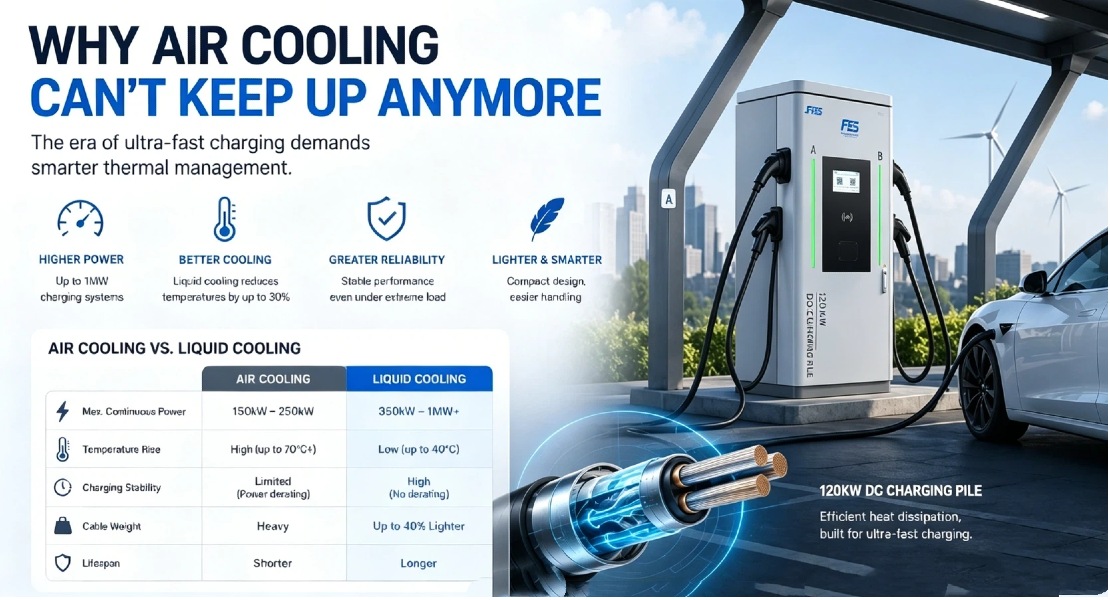
Traditional air cooling struggles to dissipate this heat efficiently, especially during continuous high-load operation.
As a result, overheating risks increase, cable weight becomes difficult to manage, and charging performance may be reduced to protect system safety.
Why Liquid Cooling Is Becoming Essential
Liquid cooling offers a far more efficient method of thermal management compared to air cooling.
By circulating coolant directly through charging cables and critical components, liquid-cooled systems can maintain lower operating temperatures even under extremely high current conditions.
This provides several important advantages:
⚡ Higher continuous charging power
⚡ Reduced cable size and weight
⚡ Improved user handling experience
⚡ Greater operational stability
⚡ Longer component lifespan
⚡ Better performance in high-temperature environments
This is one of the main reasons why many next-generation ultra-fast chargers are shifting toward liquid-cooled architecture.
Industry analysts predict that liquid-cooled charging infrastructure will become standard for high-power charging stations over the next several years, especially for highway corridors, commercial fleets, and heavy-duty transportation.
The Future Of Charging Requires Smarter Energy Management
As charging power increases, energy demand on the grid also rises dramatically.
Deploying multiple ultra-fast chargers at a single site can create enormous peak loads, making grid expansion expensive and time-consuming.
This is why more operators are now combining:
EV Charging
Battery Energy Storage Systems (BESS)
Smart Energy Management
into integrated energy solutions.
At FES Power, we believe the future of EV charging is not only about faster charging — it is about smarter energy utilization.
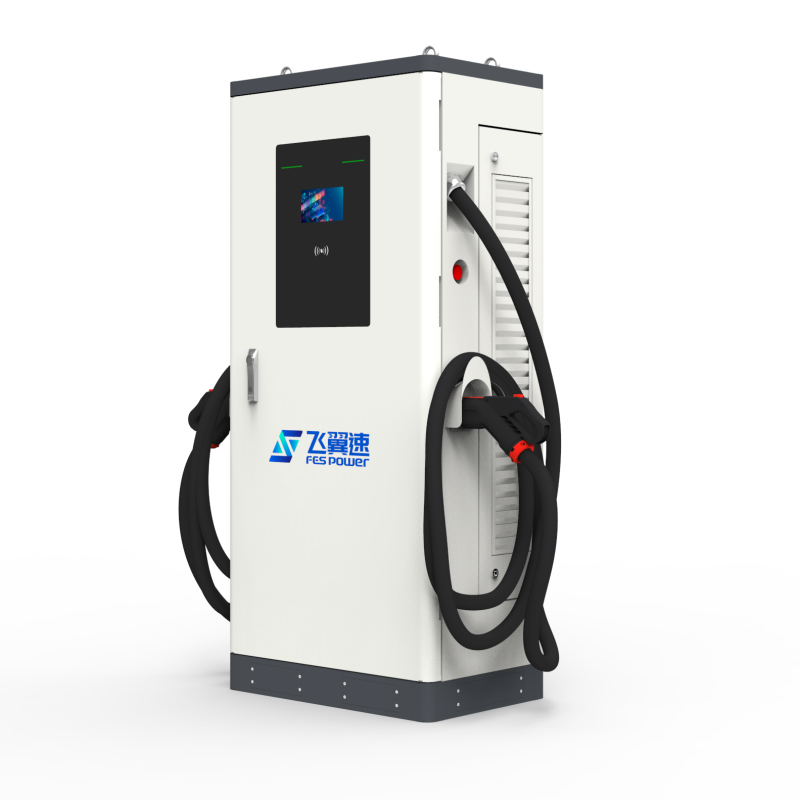
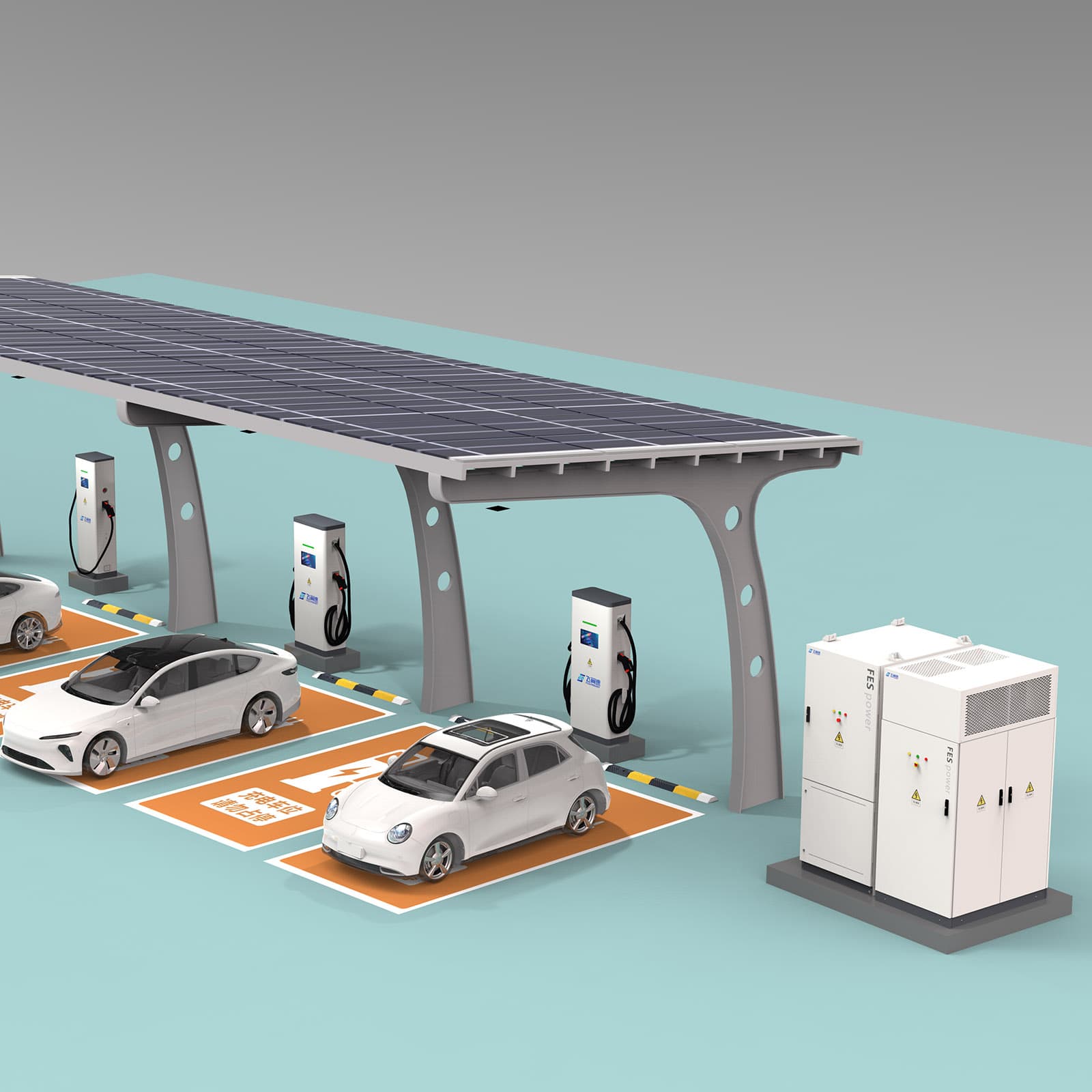
Our high-power DC charging solutions are designed to support the evolving demands of next-generation EV infrastructure. In addition, our integrated energy storage charging systems help reduce grid pressure while improving deployment flexibility for off-grid and peak-shaving applications.
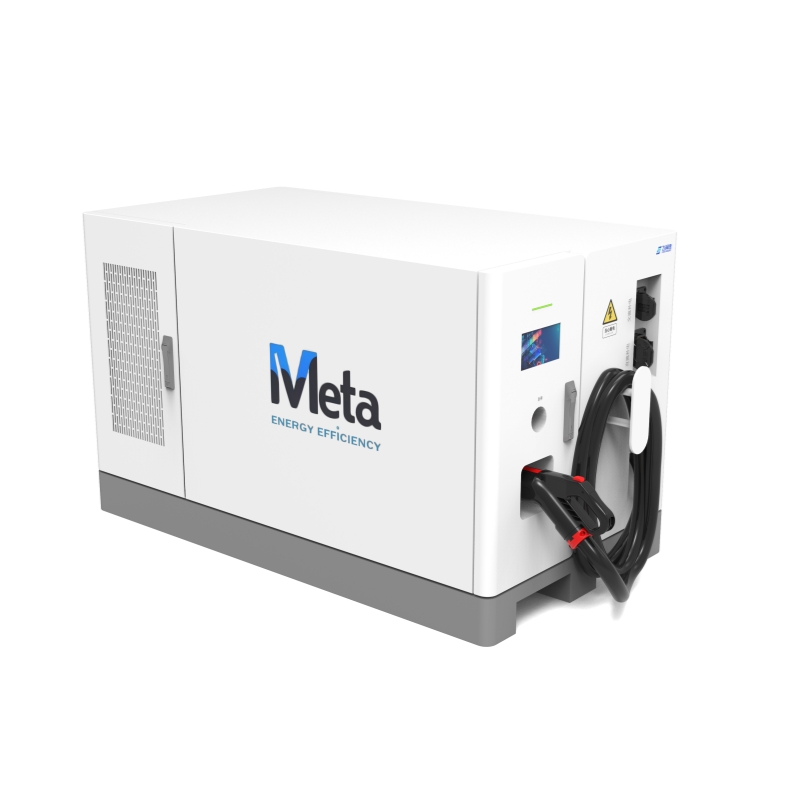
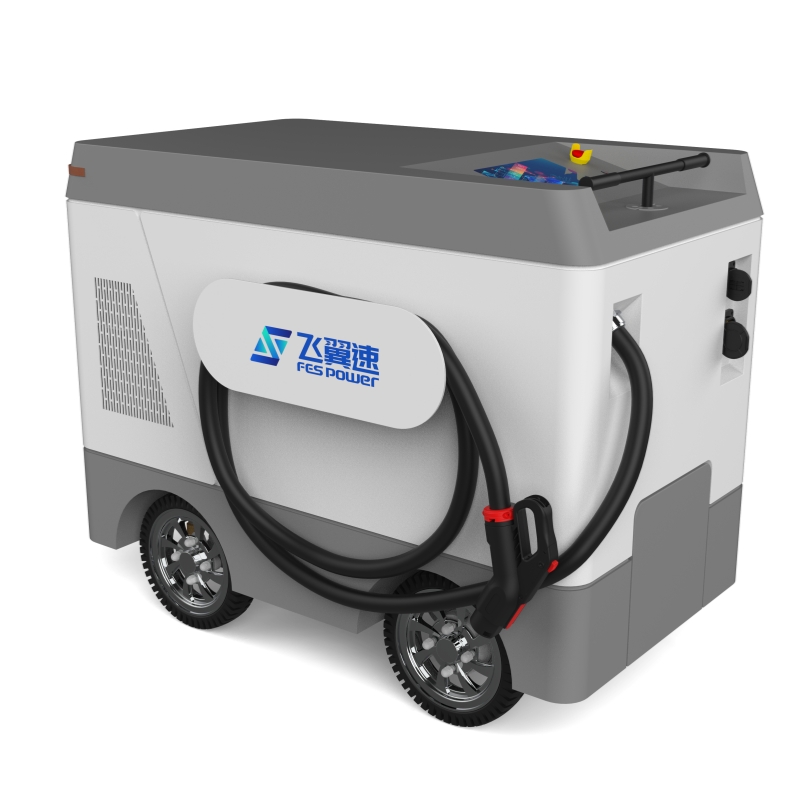
For mobile and flexible charging scenarios, FES Power’s Meta series mobile energy storage charging solutions provide an efficient combination of mobility, energy storage, and fast charging capability.
Meanwhile, our Cannon series supports high-performance charging applications with reliable system architecture designed for commercial and industrial environments.
From “Fast Charging” To “Reliable Fast Charging”
The EV industry is rapidly moving beyond the early stage of simply increasing charging speed.
Today, operators and customers are paying more attention to:
Reliability
Thermal stability
Energy efficiency
Smart power distribution
Long-term operational cost
In this transition, liquid cooling is no longer just a premium feature.
It is becoming an essential technology for the next generation of EV charging infrastructure.
As EV adoption continues to accelerate worldwide, the companies that can combine high-power charging with intelligent thermal and energy management will help shape the future of sustainable transportation.



 IPv6-Netzwerk unterstützt